COCOK
Multi-tenant financial reconciliation platform: bank and gateway statements in, matched transactions and exceptions out
The Problem
Indonesian businesses collect money through banks, payment gateways like Xendit and Midtrans, e-wallets, and marketplaces, then try to reconcile all of it in spreadsheets. Every channel exports a different CSV format, nothing lines up, and month-end close turns into days of copy-paste. Existing accounting tools assume one currency and one channel and never handle the mess in between.
What I Built
COCOK is a B2B reconciliation platform that ingests financial data from any channel, normalizes it into one canonical transaction model, matches it automatically, and surfaces only what does not match for a human to investigate.
The pipeline:
- Ingest: upload CSV statements (Indonesian headers like
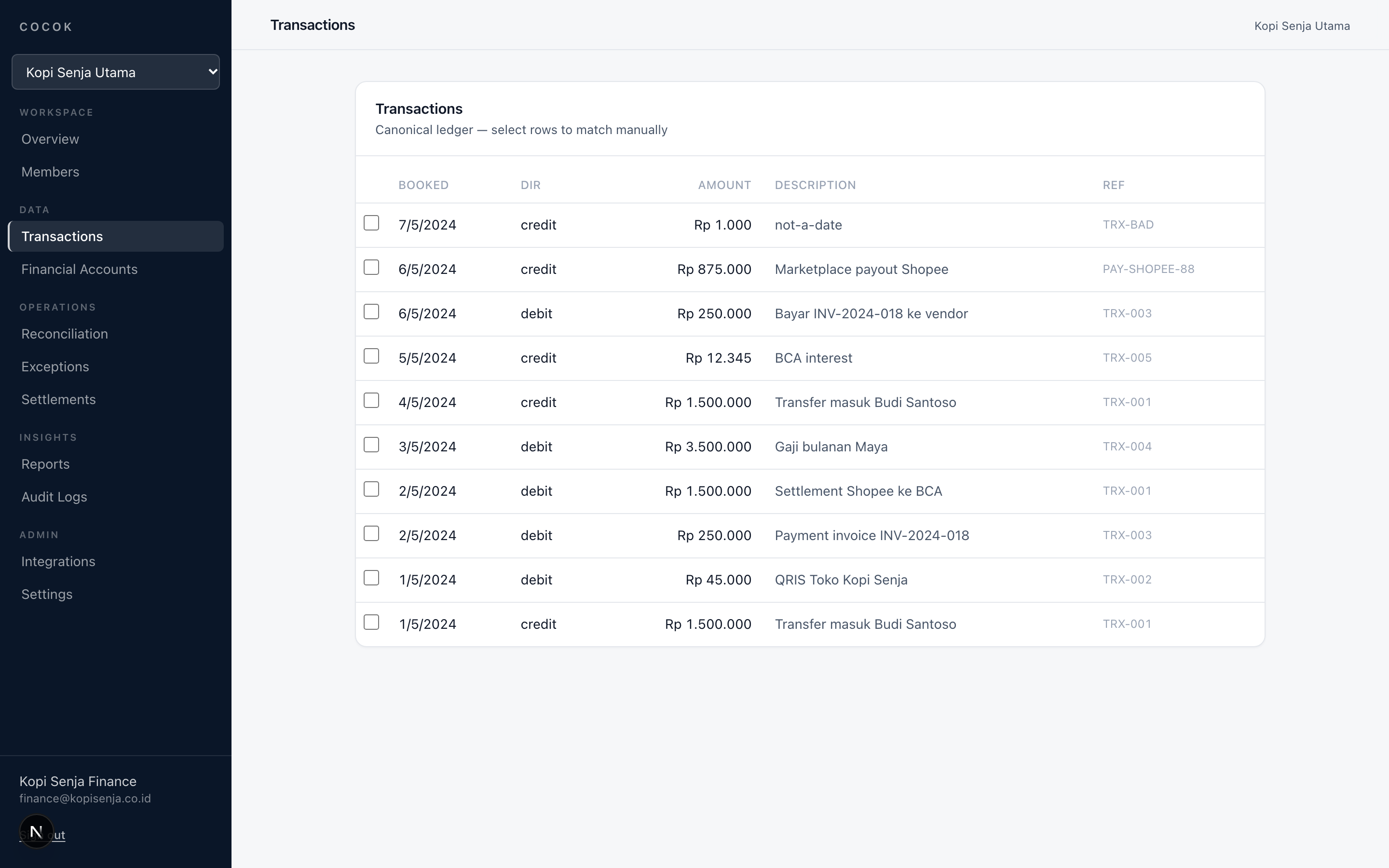
Tanggal,Nominal,masuk/keluarauto-detected) into a typed import batch with row-level validation before anything touches the ledger - Normalize: every row becomes an integer-minor-unit transaction in one canonical schema, defaulting to IDR and
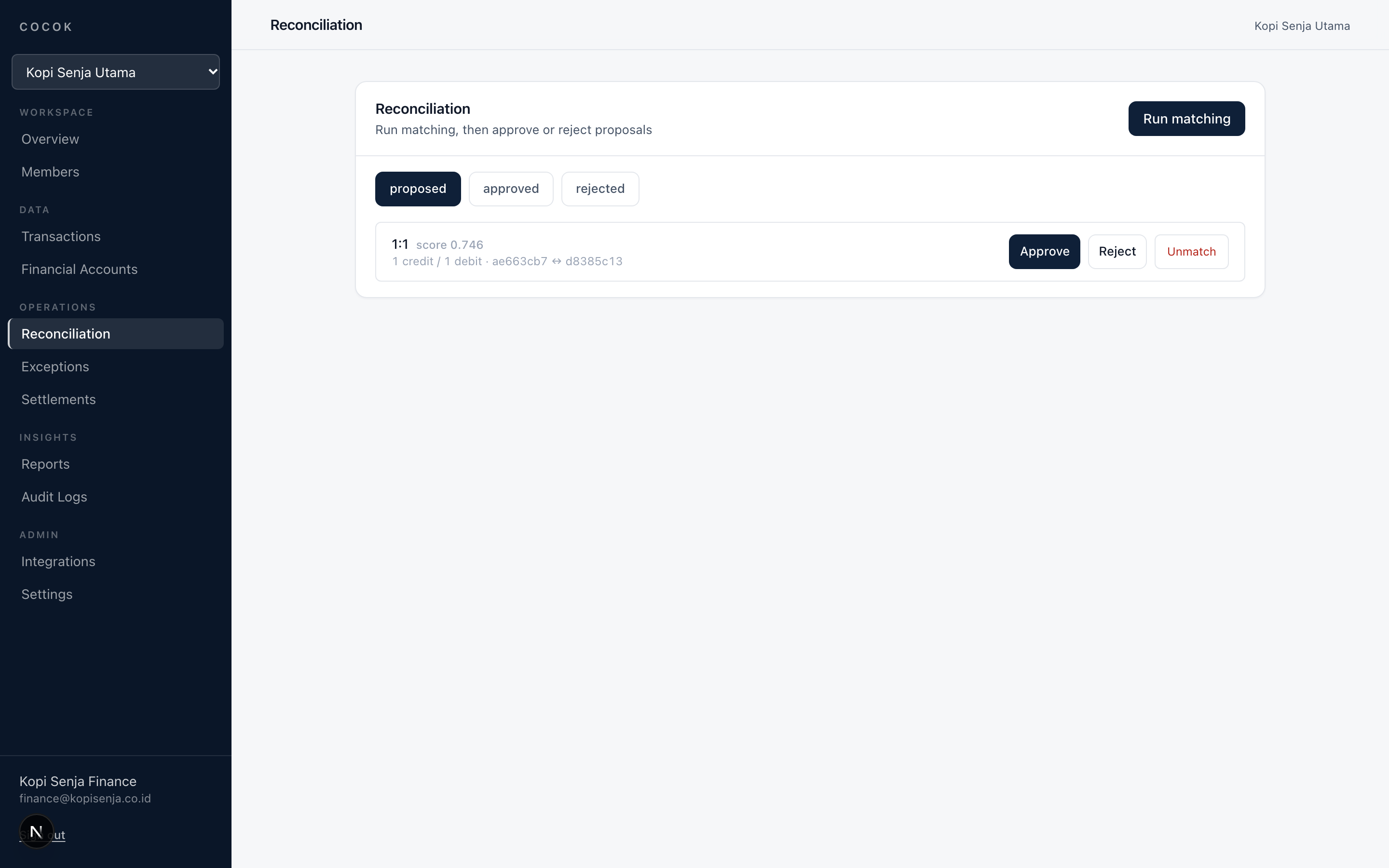
Asia/Jakarta - Match: deterministic scoring across reference, amount, date, counterparty, and description proposes 1 and 1 groups with a visible score
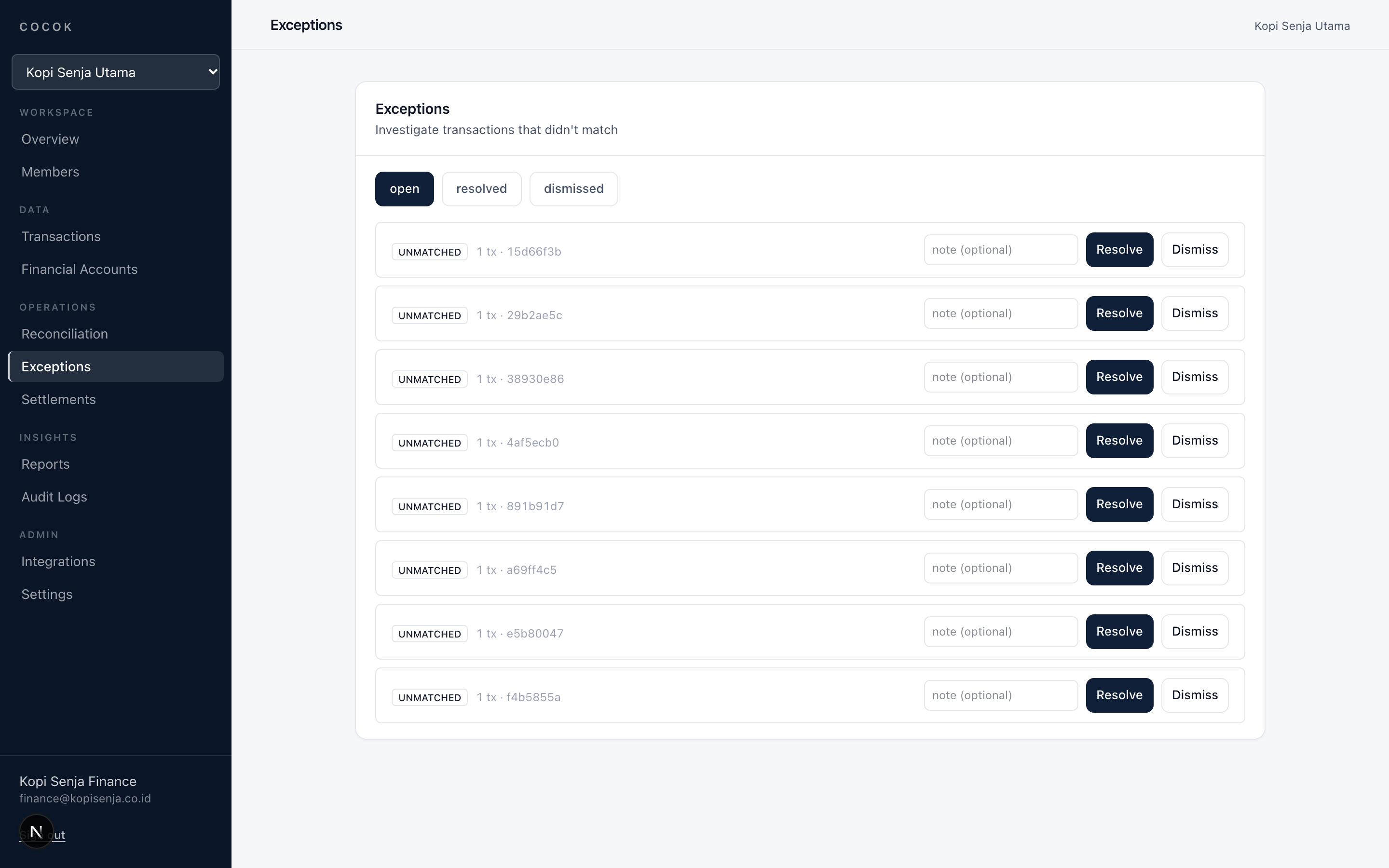
- Investigate: unmatched transactions become exceptions with resolve/dismiss workflows; matches can be approved, rejected, or unmatched
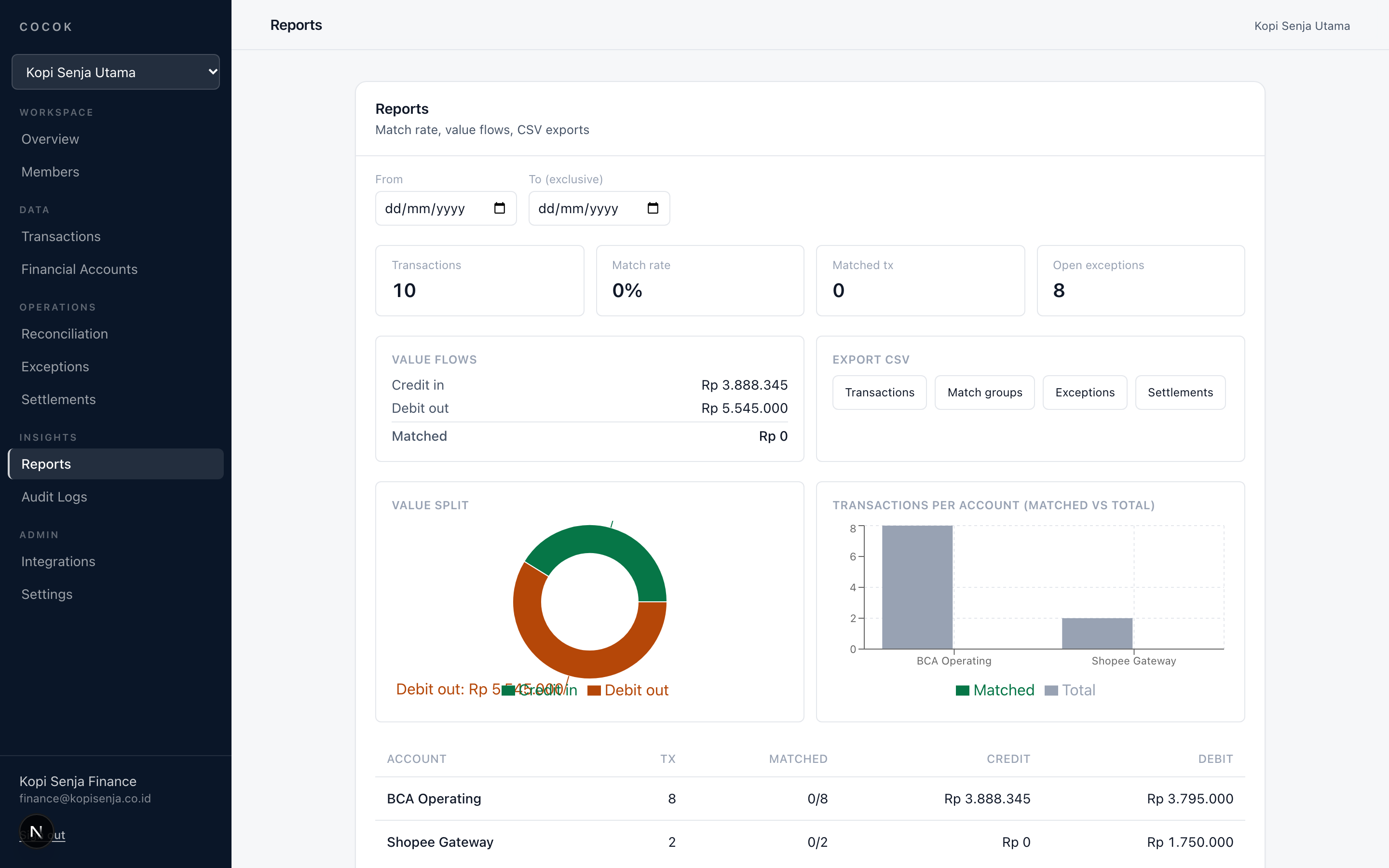
- Report: match rate, value flows, per-account breakdowns, and CSV exports of transactions, match groups, exceptions, and settlements
Technical Decisions
- Go + Chi + pgx + sqlc: a modular monolith, not microservices. sqlc generates type-safe queries from SQL, so the database stays the source of truth without an ORM in between
- Money as integer minor units (
amount_minor BIGINT): no floats anywhere, ever. Currency defaults to IDR withAsia/Jakartalocale baked into the schema - Multi-tenancy enforced in middleware: every owned entity carries
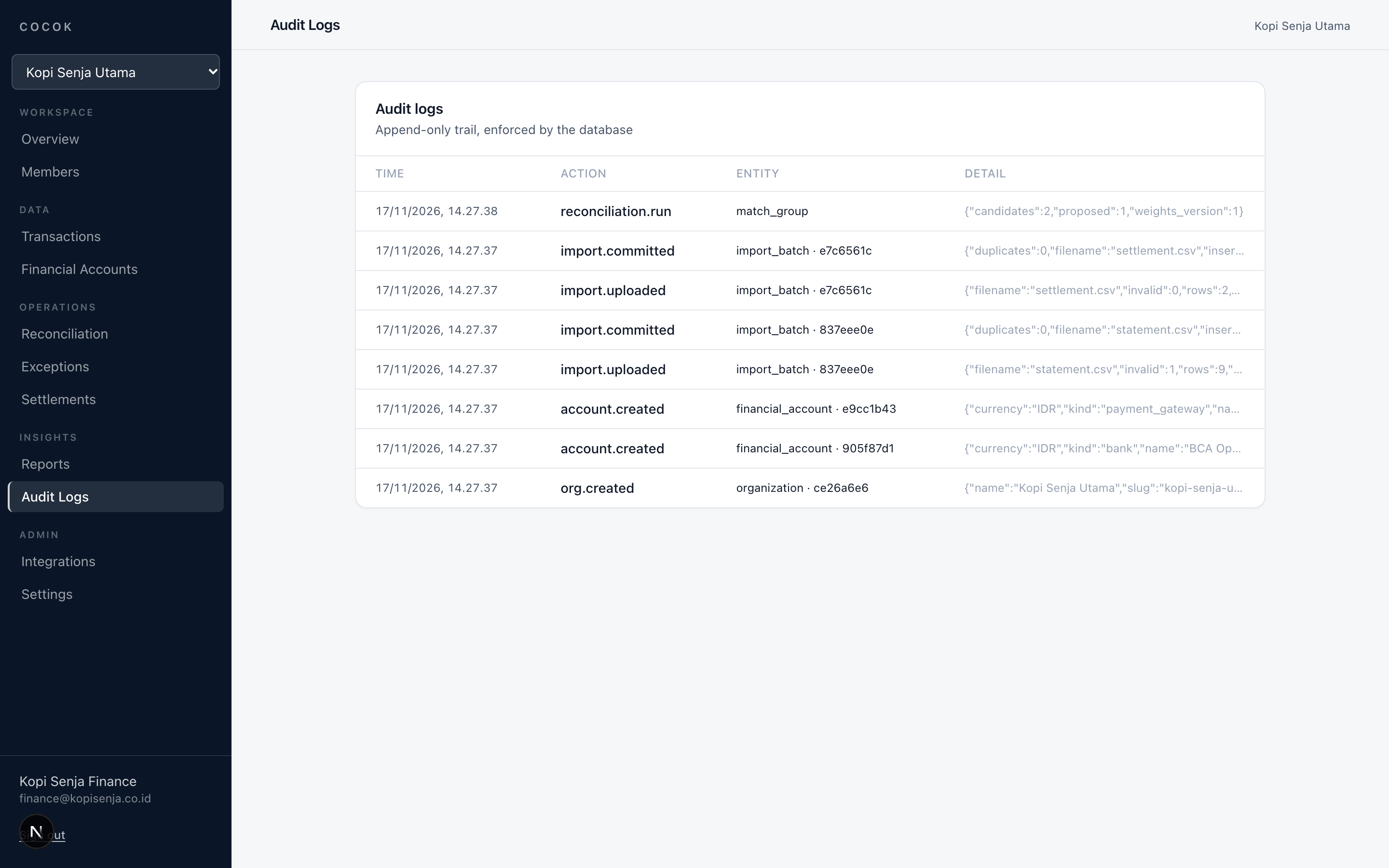
organization_id, membership is checked before the handler runs, and cross-org reads return404instead of leaking existence. Covered by integration tests against a real Postgres - Security: Argon2id password hashing, opaque session tokens stored as SHA-256 hashes with rotation on refresh and revocation on logout, permission-based RBAC across 5 roles, and an append-only audit log enforced at the database level
- CSV import with validation first: rows are parsed, column-mapped, and validated in a staging batch. Invalid rows report the exact field and reason; commit inserts only valid rows and records duplicates
- Next.js App Router + TypeScript strict on the frontend, with TanStack Query, React Hook Form, Zod, and Recharts for the data-dense finance UI
Result
- MVP complete: full ingestion to reconciliation to exceptions to settlements to reports pipeline, provider webhooks, auth recovery, in 7 implementation phases
- Load tested with k6: 5 virtual users for 15 seconds, 2,072 requests, 0% errors, p95 at 9.4ms locally, ~136 requests/second
- Integration test suite against real Postgres covering tenant isolation, authentication, and RBAC, run in CI on every push
- Real matching end to end: imported a bank statement and a gateway settlement file, and the engine proposed a scored 1 match with the remaining 8 transactions queued as exceptions
- Full audit trail: every import, match run, and account change recorded as an append-only event with request payloads
Shows: multi-tenant Go APIs, SQL data modeling, deterministic matching, Next.js dashboards, auth/RBAC/audit hardening
Building something similar?
I'm open to exciting products, collaborations, and engineering opportunities.